
Maintaining House Plants & Indoor Greenery...
Indoor plants are an easy way to bring greenery, character and warmth into your home. Whether you're looking for a statement plant for your living room, a small plant for your desk or a low-maintenance option for a busy lifestyle, there are many types of indoor plants to choose from.

However, not every indoor plant has the same needs. Some plants thrive in low-light areas and require very little watering, while others need bright light, regular watering and more attention.
Understanding the different types of indoor plants and their care requirements can help you choose the right plant for your home and keep it looking healthy and beautiful.
Popular Types of Indoor Plants
Indoor plants can be broadly grouped according to their appearance, growing habits and care requirements. Some of the most popular choices include foliage plants, indoor trees, palms, succulents, cacti and flowering plants.
Let's look at each type and how to care for it.
1. Foliage Plants
Foliage plants are indoor plants that are primarily appreciated for their leaves. They come in different shapes, sizes, textures and shades of green, making them versatile choices for homes and interiors.
Some popular foliage plants include:
- Pothos
- Philodendron
- Monstera
- Aglaonema
- Dieffenbachia
- Dracaena
- Bamboo
- Croton

How to care for foliage plants
Most foliage plants prefer bright, indirect light, although some varieties can tolerate lower-light conditions.
For healthy growth:
- Water when the top layer of soil begins to dry.
- Avoid keeping the soil constantly wet.
- Use a pot with adequate drainage.
- Keep plants away from strong air-conditioning drafts.
- Clean dusty leaves regularly.
- Remove dead or damaged leaves when necessary.
One of the most common indoor plant care mistakes is following a fixed watering schedule. Instead, check the soil and consider the plant's light, pot size, temperature and environment before watering.
2. Indoor Trees
Indoor trees are ideal when you want a larger plant that becomes a focal point in your interior.
Popular indoor trees include:
- Ficus
- Fiddle Leaf Fig
- Rubber Plant
- Schefflera
- Dracaena
- Olive Tree
- Bonsai
Large indoor plants can work particularly well in living rooms, entrances, corners and other spacious areas.
How to care for indoor trees
Most indoor trees need more light than low-light houseplants.
To keep them healthy:
- Place them in a bright location suitable for the particular species.
- Water when the soil has started to dry.
- Ensure excess water can drain away.
- Avoid moving the plant frequently.
- Rotate the pot occasionally if the plant is growing toward the light.
- Remove damaged growth through careful pruning.
Some indoor trees, particularly Ficus varieties, can react to sudden changes in light, temperature and location. If you've recently brought one home, give it time to adjust.
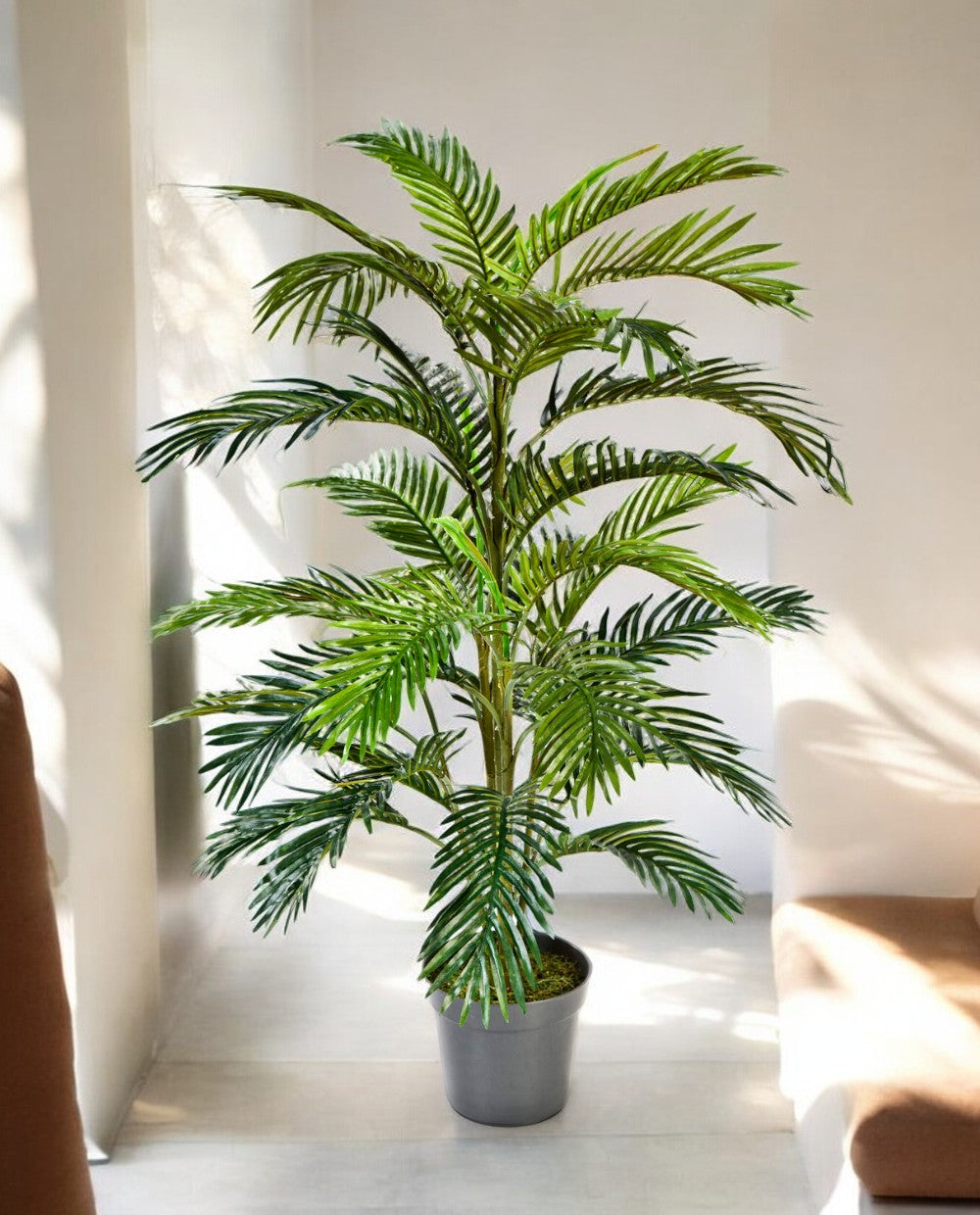
3. Indoor Palms
Palms are popular indoor plants for creating a relaxed and tropical feel. Their long, graceful leaves can add height and visual interest to a room.
Popular varieties include:
- Areca Palm
- Kentia Palm
- Parlor Palm
- Lady Palm
How to care for indoor palms
Most indoor palms prefer bright, filtered or indirect light.
Keep them healthy by:
- Keeping the soil lightly moist without making it waterlogged.
- Allowing excess water to drain properly.
- Protecting them from harsh direct sunlight when the variety is not adapted to it.
- Keeping them away from strong AC airflow.
- Removing dry or damaged fronds when necessary.
Some palms also appreciate reasonable humidity, particularly in dry indoor environments.
4. Succulents
Succulents are popular indoor plants because of their distinctive shapes and relatively low watering requirements. Their thick leaves and stems are adapted to store water.
Common succulents include:
- Aloe Vera
- Echeveria
- Haworthia
- Jade Plant
How to care for succulents
Succulents generally prefer plenty of light and well-draining soil.
When caring for succulents:
- Allow the soil to dry well between watering.
- Water thoroughly rather than giving small amounts frequently.
- Use a well-draining potting mix.
- Make sure the container has drainage.
- Never allow the plant to sit in standing water.
The most common mistake with succulents is overwatering. Their ability to store water means they generally don't need frequent watering.
5. Cacti
Cacti are a specialized group of succulents adapted to dry environments. Their unusual shapes and low-maintenance nature make them popular decorative plants.
How to care for indoor cacti
Cacti generally need:
- Plenty of light
- Well-draining soil
- Good drainage
- Infrequent watering
Allow the soil to dry thoroughly between watering sessions. The exact watering frequency depends on the type of cactus, its pot, available light and indoor environment.
Remember: more water does not mean healthier growth. Excess moisture can cause root problems.
6. Flowering Indoor Plants
If you want to add colour as well as greenery to your home, flowering indoor plants are a beautiful option.
Popular flowering houseplants include:
- Peace Lily
- Anthurium
- Orchids
- Begonias
How to care for flowering indoor plants
Flowering plants can sometimes require more specific care than hardy foliage plants.
For the best results:
- Provide the appropriate amount of light.
- Keep watering consistent without leaving the soil waterlogged.
- Use a pot with good drainage.
- Remove spent flowers and damaged leaves when appropriate.
- Follow the plant's specific fertilizing requirements.
The right balance of light, water and nutrition can help support healthy flowering.
How Much Light Do Indoor Plants Need?
Light is one of the most important factors in indoor plant care.
Before choosing a plant, consider the amount of natural light available in the space.
Low-Light Indoor Plants
Low-light plants can tolerate areas that receive relatively limited natural light.
Popular examples include:
- Snake Plant
- ZZ Plant
- Some Aglaonema varieties
However, low light does not mean no light. All plants need light for photosynthesis and healthy growth.
Bright, Indirect Light
Bright, indirect light means the room receives plenty of natural light without strong direct sunlight continuously hitting the plant.
Many tropical foliage plants prefer these conditions.
Direct Sunlight
Direct sunlight means sunlight reaches the plant's leaves without being filtered.
Some cacti, succulents and outdoor plants can tolerate or prefer direct sunlight. However, intense sunlight through a window can be surprisingly strong and may scorch plants that are not adapted to it.
Tip: Before buying an indoor plant, think about where you intend to place it. Choosing a plant based on the available light can make plant care much easier.
How Often Should You Water Indoor Plants?
One of the most common questions about indoor plant care is: How often should I water my plants?
There is no universal watering schedule.
The right frequency depends on:
- Plant type
- Pot size
- Soil type
- Light levels
- Room temperature
- Humidity
- Drainage
- Season
Instead of watering every plant on the same day, check the soil and the plant's individual needs.
Signs Your Indoor Plant May Be Overwatered
Possible signs include:
- Yellowing leaves
- Soil that stays wet for long periods
- Drooping despite wet soil
- Unpleasant soil odour
- Root problems
Signs Your Indoor Plant May Need More Water
Possible signs include:
- Very dry soil
- Wilting
- Drooping leaves
- Brown or crispy leaf edges
Keep in mind that these symptoms can have multiple causes. A yellow leaf does not automatically mean that the plant has been overwatered.
Finding Plant Care Overwhelming?
We understand. Knowing how much to water, where to place your plants, when to fertilize, and how to keep them healthy can feel like a lot.
You don't have to do it all yourself.
If you find plant care overwhelming, book a plant care service with Tree of Life. We'll assess what your plants need and take care of them accordingly, from watering and cleaning to pruning, feeding and regular maintenance.
You take care of your space. We'll take care of the plants.